

Has anyone decided how you should be developed without asking you? The last time I worked for an...
Are you an office, home or hybrid person?
I’m a hybrid girl. I like being in an office. I like seeing people, having conversations, meeting clients and feeling connected to what’s going on around me. But I also like working from home.

Home is where I can shut everything else out and get some deep work done. Yes, I can put headphones on in the office, and I do, but I’m generally not going there to ignore everybody.
I go into an office for connection. I stay home when I need concentration.
That works for me. It won’t work in exactly the same way for everybody else.
Which is why I struggle with the idea that bringing people back into the office for a set number of days will somehow, by itself, build culture.
It won’t.
What are we actually bringing people back for?
We hear it all the time:
“We need people back in the office to rebuild our culture.”
Okay, but what does being in the office actually mean for your people?
- What does their work involve?
- Where do they do their best thinking?
- Where are their clients?
- What are they missing by being at home?
- What might they lose by being required to come in?
Some organisations have people out on the road for much of the week. If you require those people to be in the office three days, what are you asking them to give up?
Do you want them sitting at a desk where you can see them, or out with clients, building relationships, creating opportunities and adding value?
Those aren’t minor details. They’re the work.
Ask before you decide
The best approaches I’ve seen haven’t started with leaders deciding how many days everyone needs to be in the office. They’ve started with questions:
- What would coming back into the office mean for you?
- What work is better done together?
- What work needs quiet and concentration?
- When does being together genuinely improve the outcome?
- What do we want people to experience when they come in?
- Are there different needs across different roles?
That doesn’t mean every person gets exactly what they want.
Everyone has a preference. Some people love the energy of being surrounded by others. Some need more space and quiet. Some have an ideal home setup. Others are working from the corner of a bedroom with a dog, two children and a courier arriving every seven minutes.
A leader may still need to make a decision, but at least it will be grounded in the reality of the work and the people doing it—not just a number someone thought sounded about right.
Bring people together for a reason
Sometimes I want everyone in the office because I’d really like to see them. So I say that. But I also try to give that time a purpose.
We might catch up on the work, but we might also throw ideas around:
- What are we missing?
- What’s changing?
- What’s new in the market?
- What have you seen that’s really cool?
- What are you interested in that the rest of us might not know about?
I’m not asking people to come in so they can sit beside me and prove they’re working. I’m asking because I want their voice, their mind in the room and the different perspective they bring.
One approach says, “Your presence is required.” The other says, “Your contribution matters.”
If everyone is on Teams, why did you bring them in?
If people are travelling across town to sit at a desk with their headphones on, joining a Teams meeting with someone sitting three desks away, seriously—what is the point?
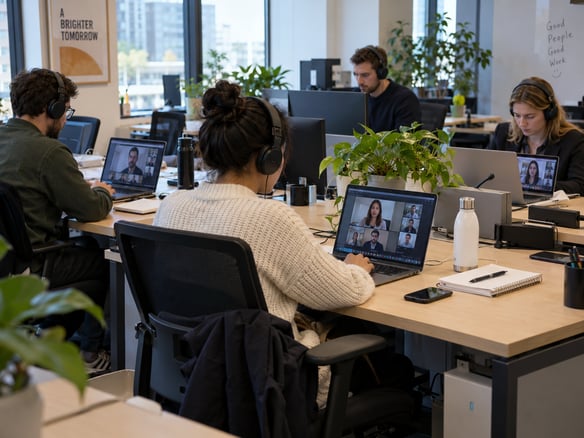
Physical proximity doesn’t automatically create connection. Attendance doesn’t automatically create trust. Seeing someone at their desk doesn’t tell you whether they’re doing meaningful work.
There may be genuine reasons for having people together: collaboration, learning, problem-solving, supporting newer team members, building relationships and having conversations that are harder through a screen.
Great. Bring people together for those things. Make the day worth the commute.
Culture isn’t a location
Culture is how people experience being part of your organisation.
It’s whether they feel trusted. Whether they understand why decisions are being made. Whether their circumstances have been considered. Whether their contribution is valued once they arrive.
You can require people to be in an office. You cannot require them to feel connected to it.
People coming into an office doesn’t build culture. Bringing them together for a purpose—and making their contribution matter—provides the ingredients for a better culture.
Seeing something similar in your organisation?
Explore how Culture Intelligence helps leaders understand the experience beneath workplace decisions.
Want a regular view of the patterns we’re seeing?
Join Culture Kōrero, my monthly newsletter where I share insights from the conversations I’m having and the patterns emerging across workplaces.